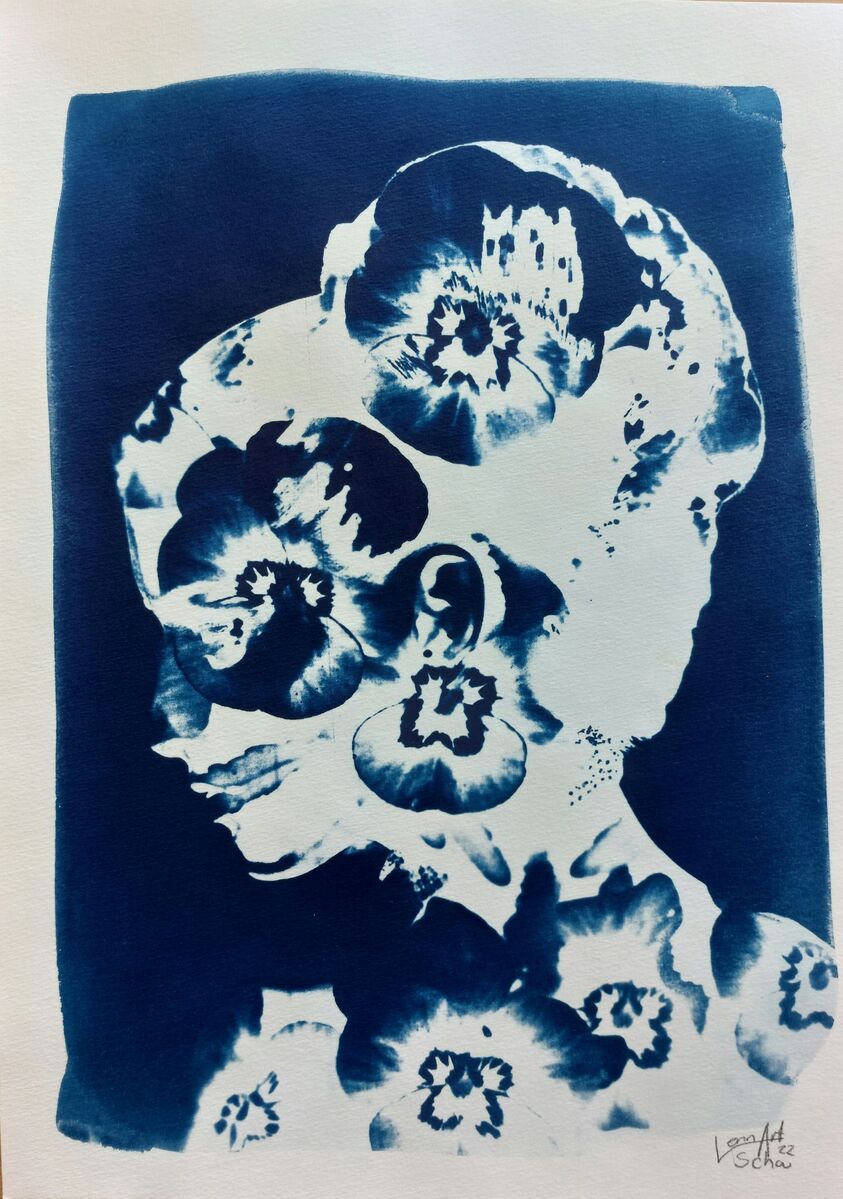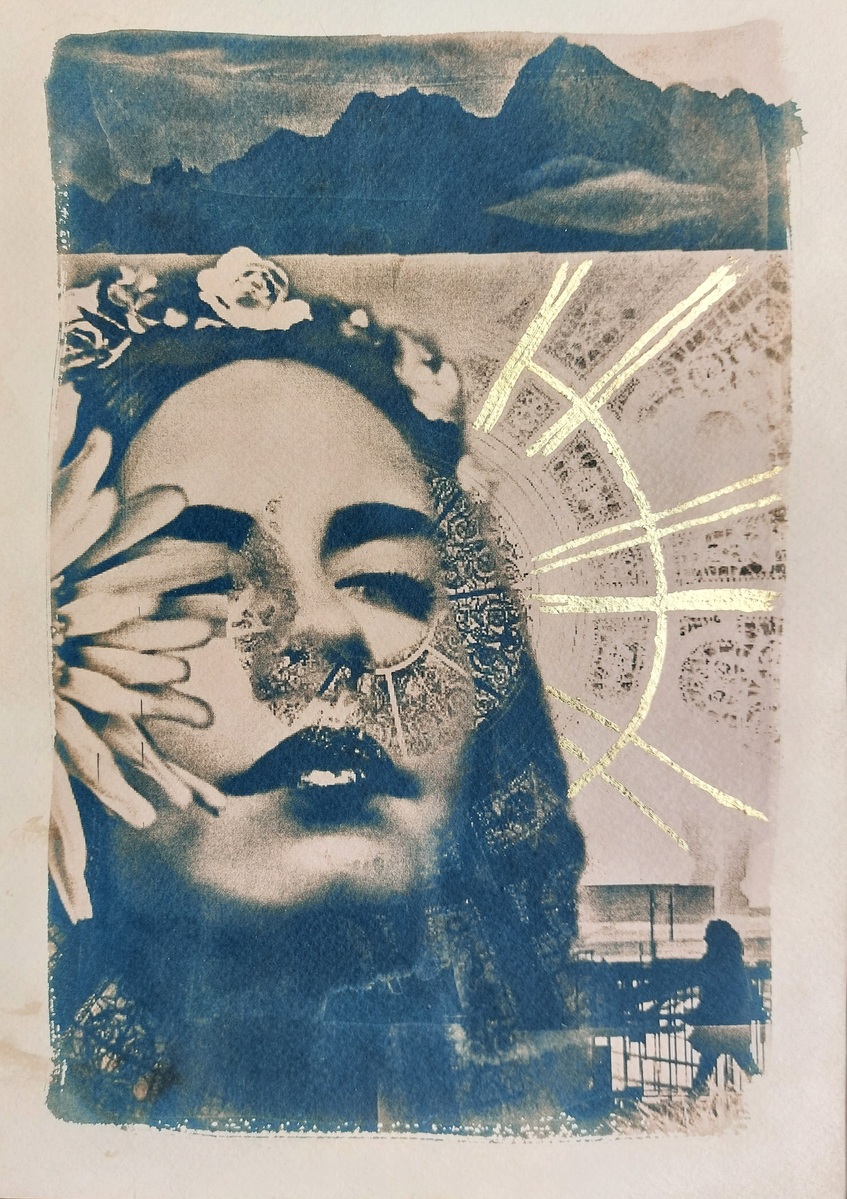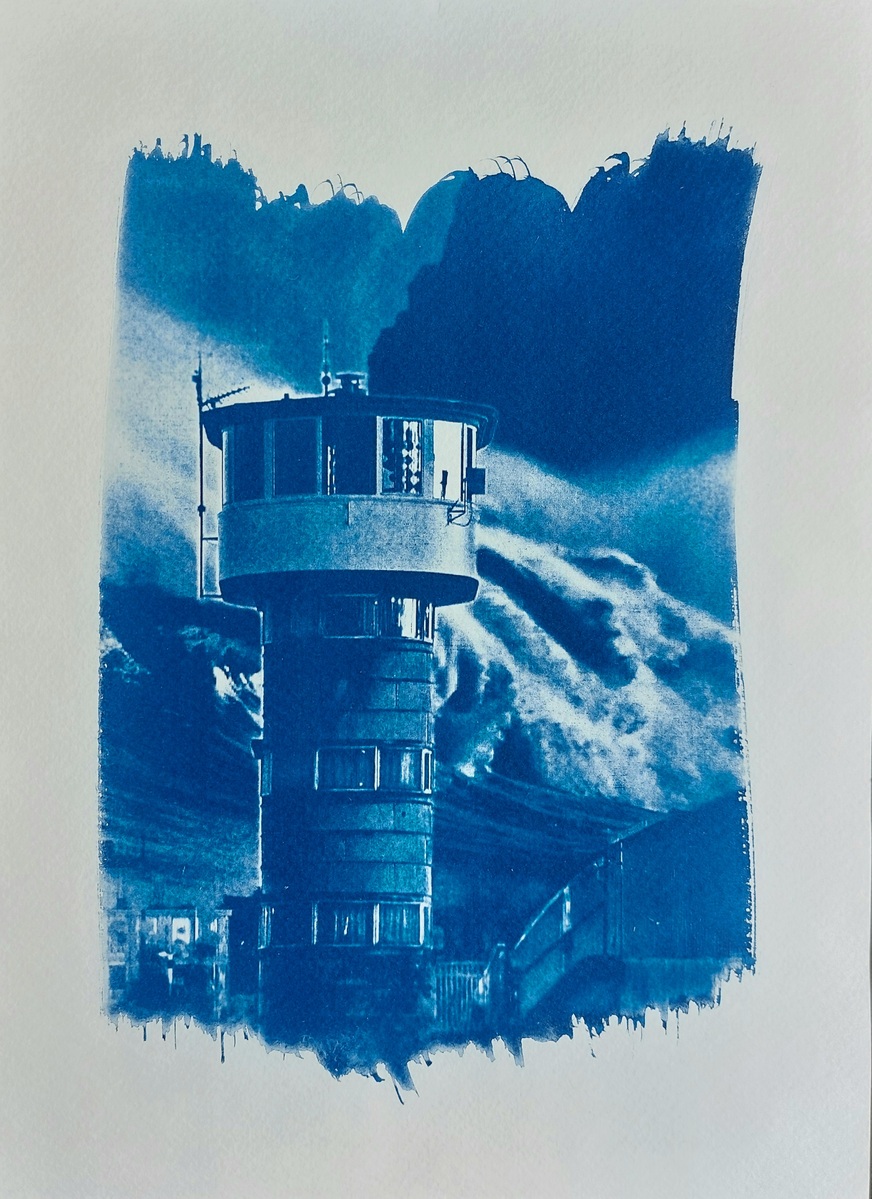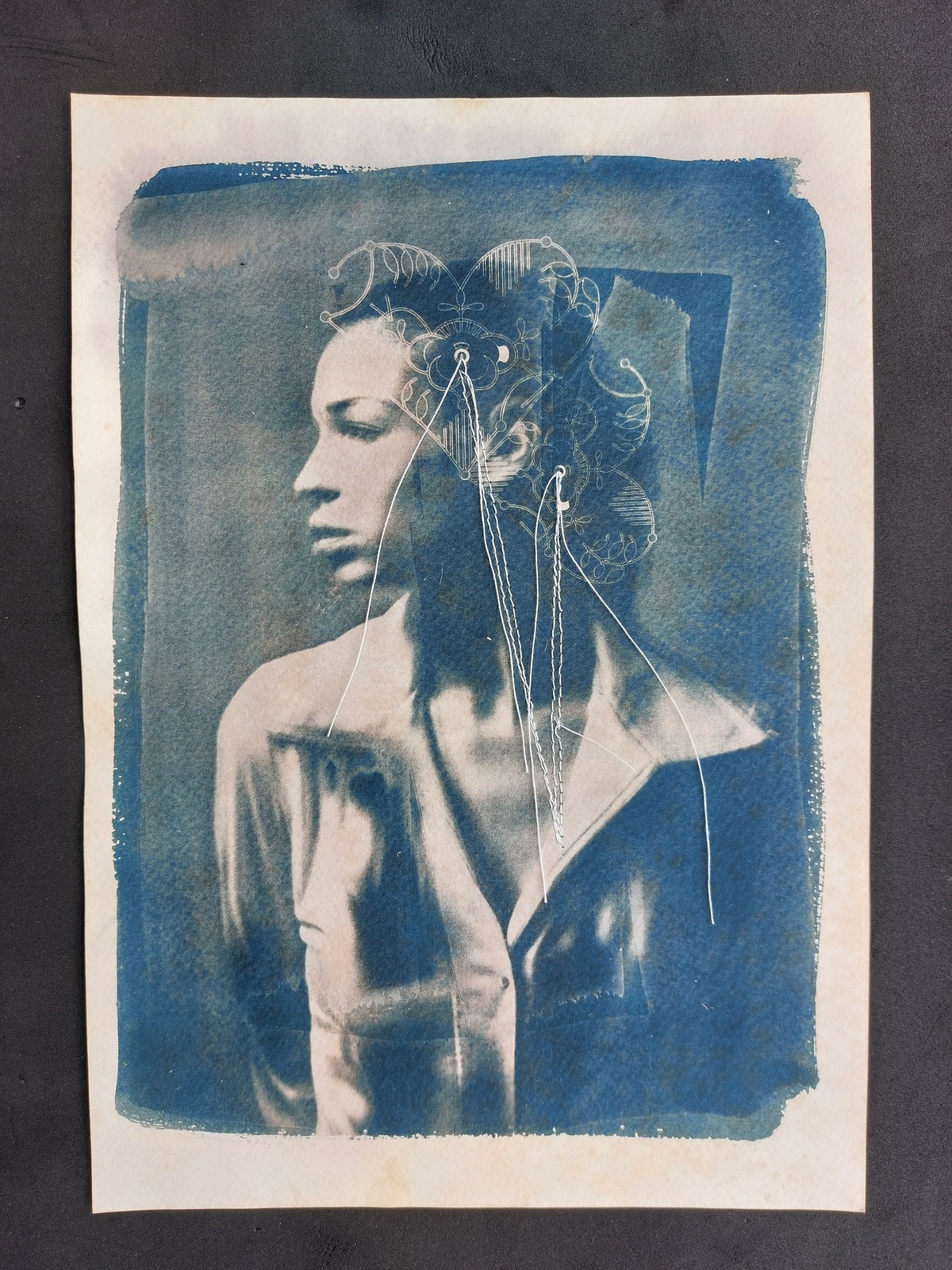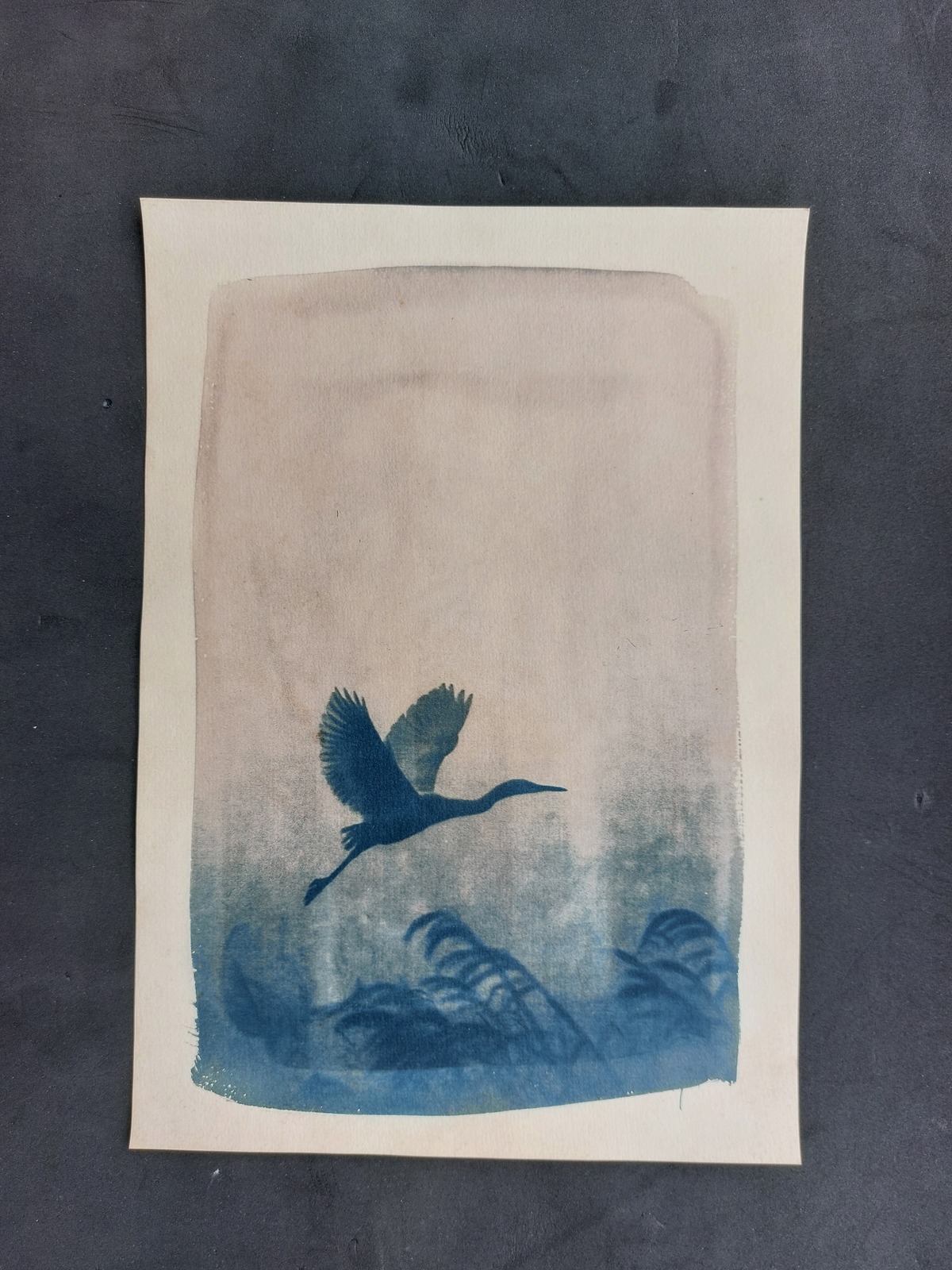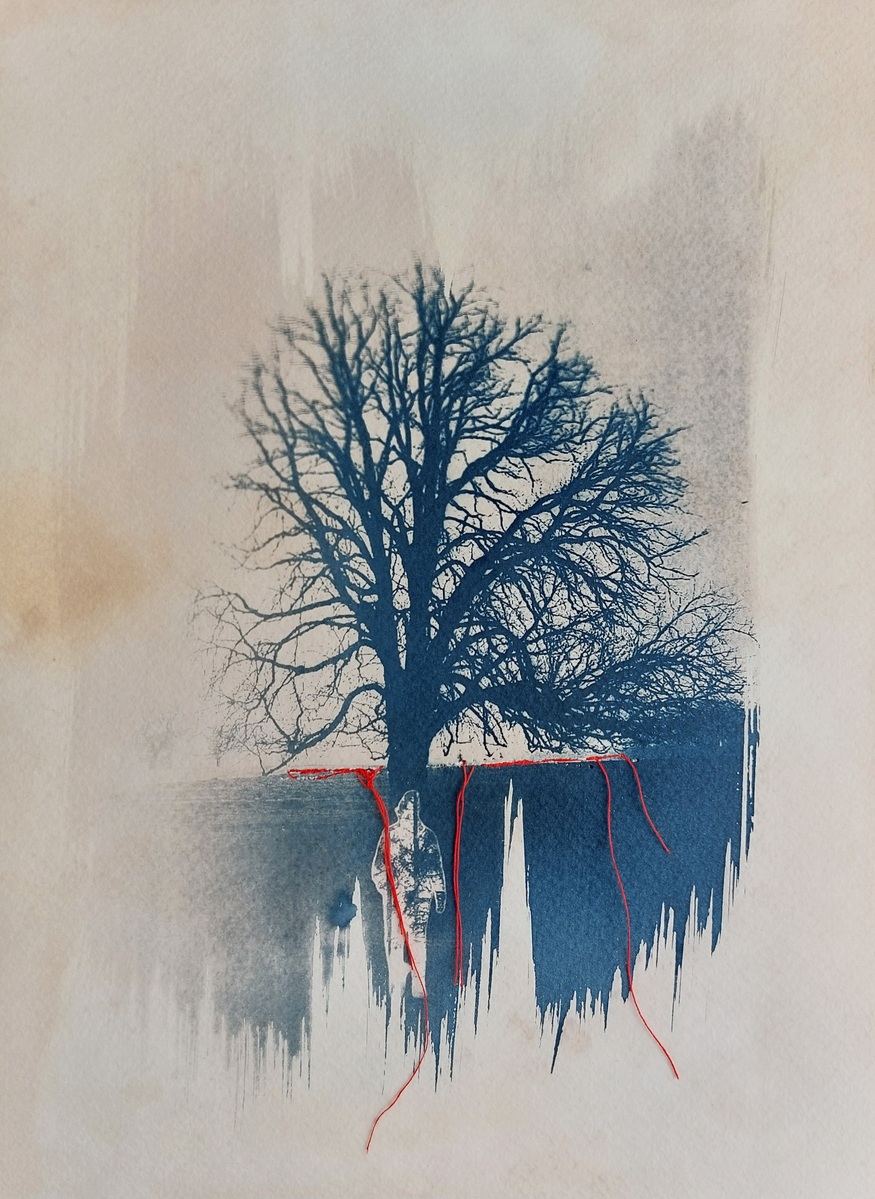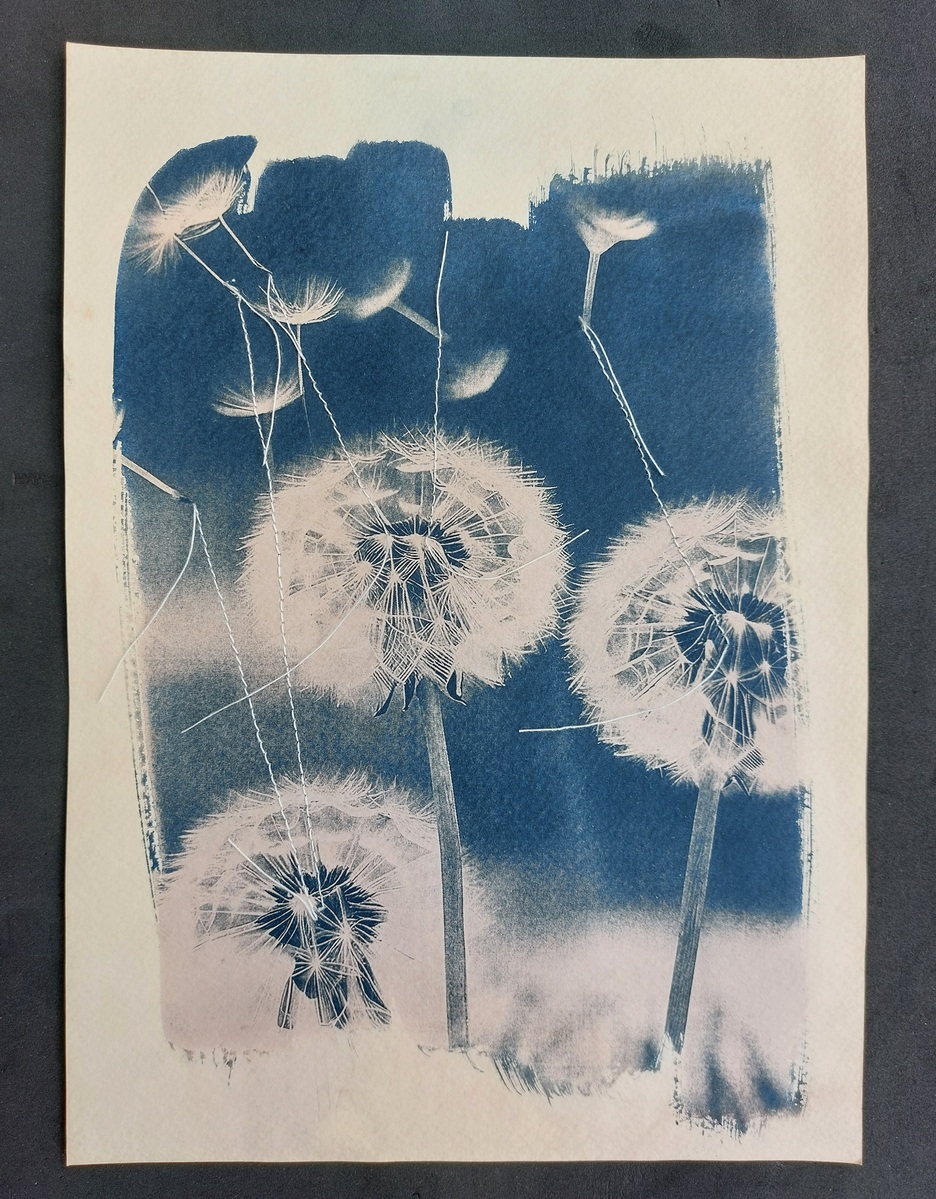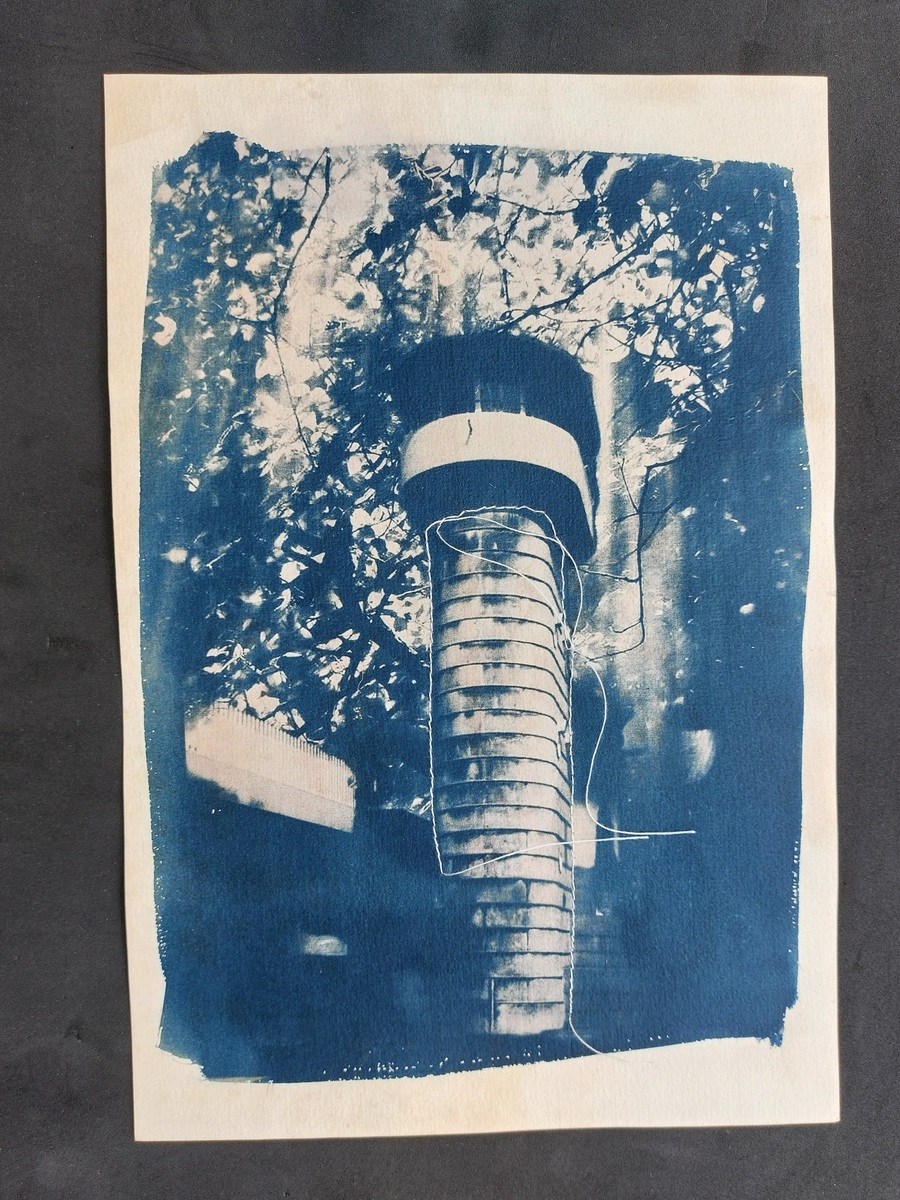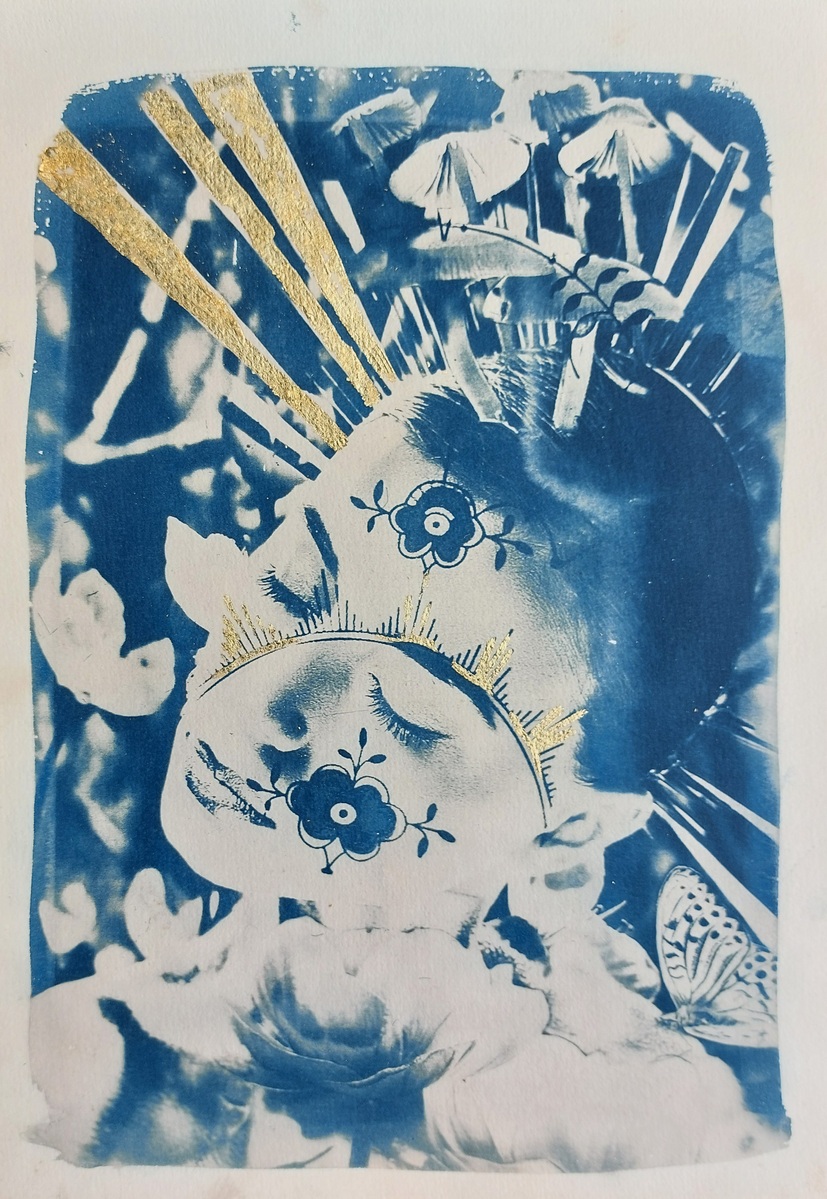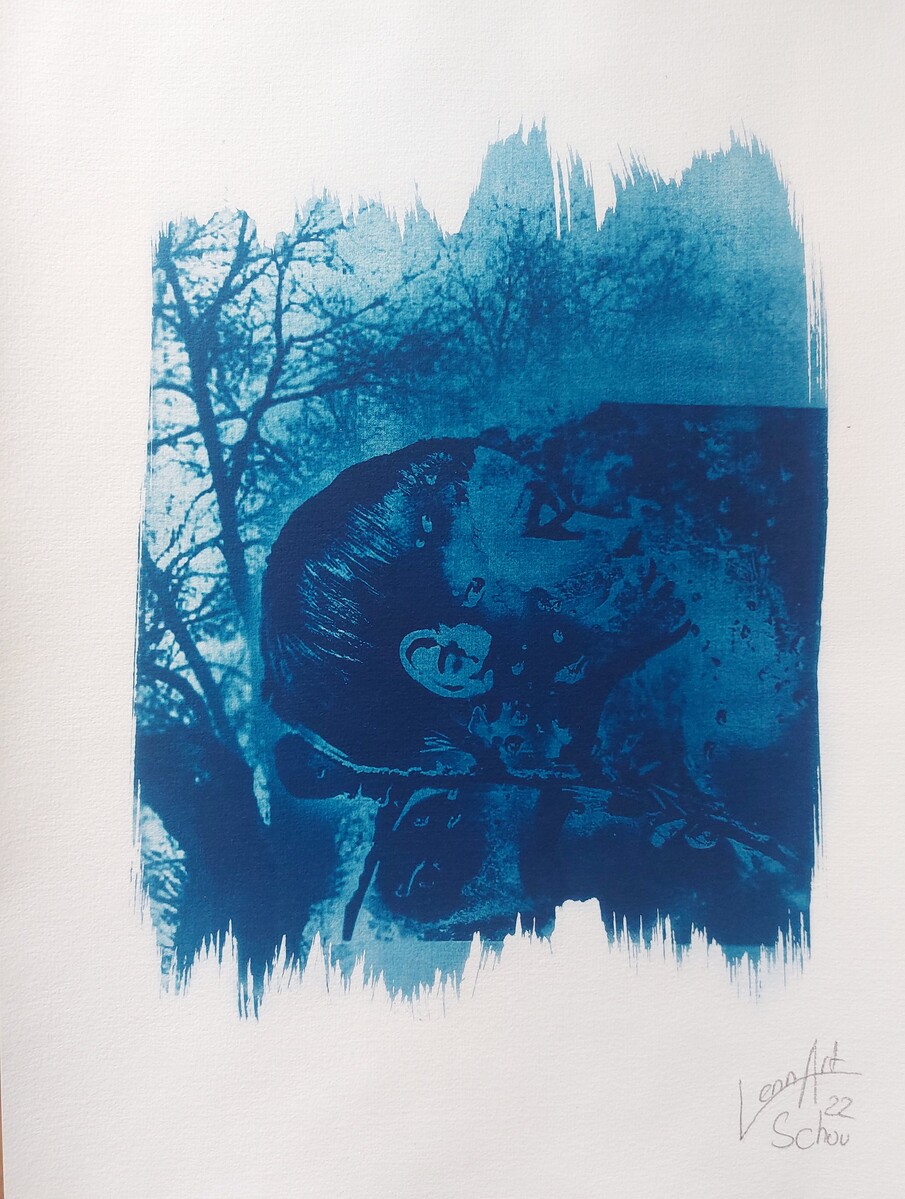
While painting is created with brush and color, cyanotype is a direct interaction with the elements of nature. Using a historic photographic technique from the 1840s and the sun's UV light, images are developed in deep Prussian blue tones.
The process demands both precision and surrender to the light and weather of the moment. Through cyanotype, I explore the relationship between humanity and nature—creating artwork in partnership with the sun, where subject and natural elements merge.
Cyanotype is one of the oldest photographic processes, invented in 1842 and known for its deep Prussian blue. Paper is coated by hand with a light-sensitive solution of iron salts and left to dry in the dark. A negative, an object or a painted image is then placed on top, and the sheet is exposed to UV light, either sunlight or a UV lamp. Where light reaches the paper, it turns blue. Where it is blocked, the paper stays pale. The print is developed simply by rinsing it in water, which washes away the unexposed chemistry and reveals the image. As it dries, the blue slowly deepens and settles. No two prints are exactly alike, as brushstrokes, paper texture, light and time all leave their mark.